
How to plan a built-in wardrobe that actually fits your life
By The Hiong Huat workshop
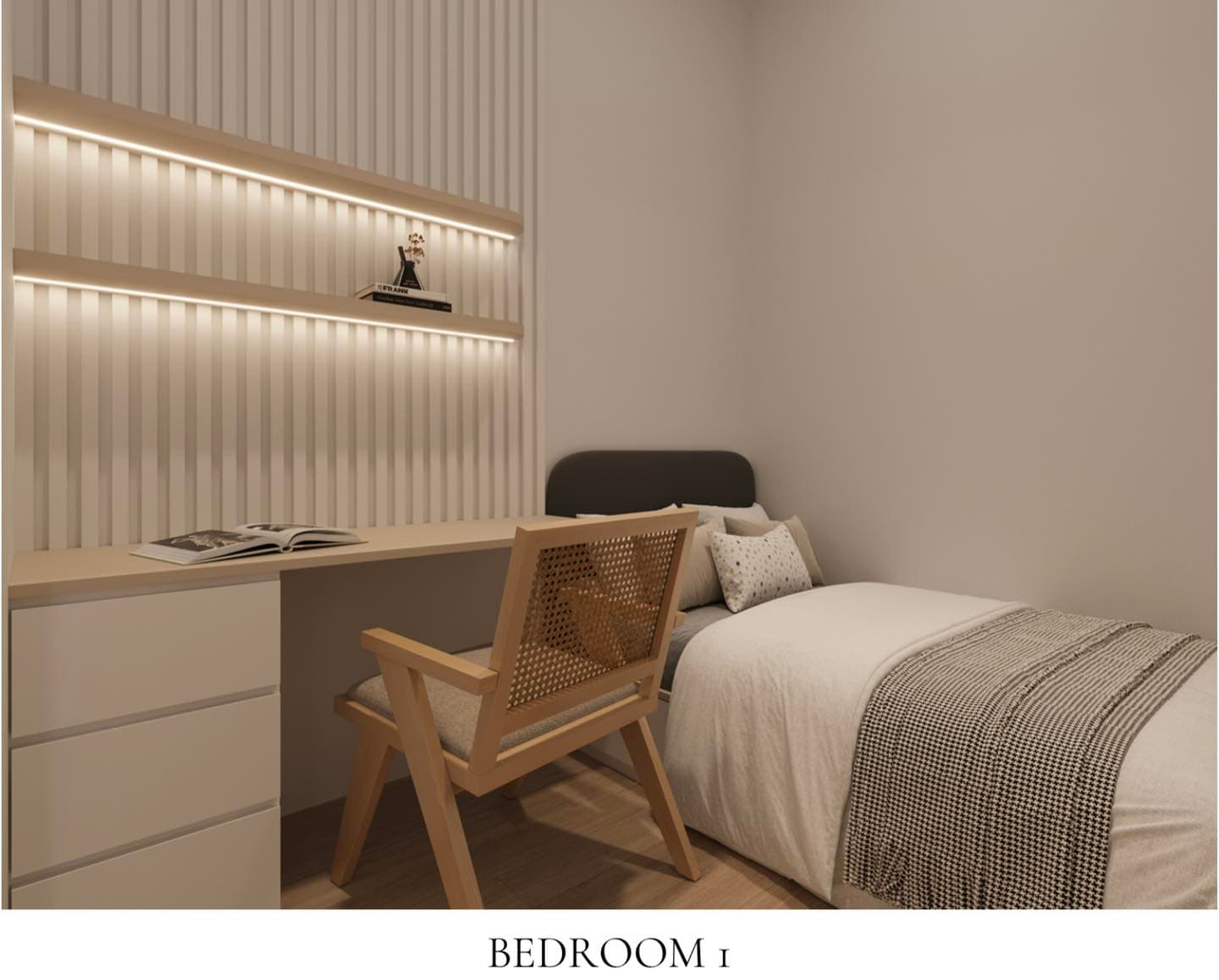
A built-in wardrobe is one of the best-value things you can do to a bedroom. It uses the whole wall, floor to ceiling, in a way a freestanding cupboard never will. It's also where we see the most regret, and nearly always for the same reason: people copy a layout they saw somewhere instead of building one around what they actually own.
Start by counting your stuff, not your wall
Before we talk doors or finishes, we ask what's going inside. How many long-hang items (dresses, coats, the baju you don't fold)? How many short-hang ones (shirts, trousers)? Roughly how many folded stacks, and how many pairs of shoes? A wardrobe that's all hanging rail is useless to someone who folds everything, and a wall of shelves is misery for someone with a lot of dresses. The layout should follow your habits, not a catalogue photo.
The boring measurements that matter
- Long-hang wants about 150–170cm of clear height. Short-hang only needs around 100cm, so you can stack two short rails in the space of one long one.
- Drawers belong between knee and chest height, where you can see into them. Don't bury them at floor level.
- Keep the very top shelf for luggage and seasonal things. Plan for it, just don't park daily items up there.
- Account for the bed. A swing door that clips the mattress is a daily little annoyance, and that's usually the moment sliding doors start to make sense.
Sliding or swing doors?
Sliding doors save the floor space a swing door needs, which is why they win in tight rooms and up against a bed. The catch is you only ever see half the wardrobe at once, and the tracks want the occasional clean. Swing doors show you the whole interior in one go and cost a little less, but they need room to open. Neither is simply “better.” It comes down to the room, and that's a five-minute conversation once we see the layout.
The small things that make it feel calm
A strip of LED on a sensor so the inside lights up when you open it. A mirror panel if the room could use the sense of space. Soft-close drawers so the room stays quiet. None of these cost much on their own, and together they're the gap between a wardrobe you put up with and one you're genuinely glad you built. When we design yours, you see the whole thing in 3D first, layout, heights, and finish, so you can move a shelf before it's ever cut rather than after.
Thinking about your own project?
Get a price direction for your space.
Share your property type, rooms, scope, timeline, and location. WhatsApp opens with the details ready so we can reply with a realistic starting point.